
Coffee-to-Water Ratio Calculator
Calculate exact coffee beans, grounds, and water weights across 9 specialty brewing methods. Features real-time grounds absorption physics, live multi-stage pour-over brew timer, and extraction flavor compass.
Coffee Flavor Compass — Dial-In Diagnostic
How does your coffee taste? Click a profile below for instant barista adjustments:
Sweet, Vibrant, Clean (Balanced Ideal)
Spot-On Extraction! Your grind size, contact time, and water temperature are harmoniously balanced. You will experience crisp acidity, natural sweetness, and a clean finish.

The Ultimate Barista Guide to Coffee-to-Water Ratios
Brewing exceptional coffee at home is fundamentally a science of extraction. When hot water contacts ground coffee beans, it dissolves soluble flavor compounds including fruity organic acids, caramelized sugars, aromatic lipids, and heavier bitter caffeine notes. The coffee-to-water ratio dictates the exact concentration and extraction percentage (Target 18%–22% Extraction Yield according to Specialty Coffee Association standards).
What is the Specialty Coffee Association (SCA) Golden Ratio?
The Golden Ratio defined by the SCA is 1:15 to 1:17 (equivalent to 55g to 65g of ground coffee per 1,000ml of water).
- 1:12 to 1:14 (Intense & Full-Bodied): Heavy mouthfeel, deep chocolate/nutty undertones, common in French Press and AeroPress concentrates.
- 1:15 to 1:16 (Balanced SCA Golden Standard): Peak sweetness, floral highlights, crisp acidity, and optimal clarity for Pour-Over (Hario V60, Kalita Wave).
- 1:16.5 to 1:17 (Delicate & Tea-Like): Crisp, bright origin notes, standard for Chemex and light-roast Ethiopian/Geisha beans.
- 1:18 to 1:20 (Mild & Smooth): Mellow daily drinking brew common in automatic batch drip coffee makers.

Master Brew Ratio Matrix by Equipment
| Brewing Method | Standard Ratio | Coffee Dose (300ml Water) | Water Temp | Grind Particle Size | Extraction Time |
|---|---|---|---|---|---|
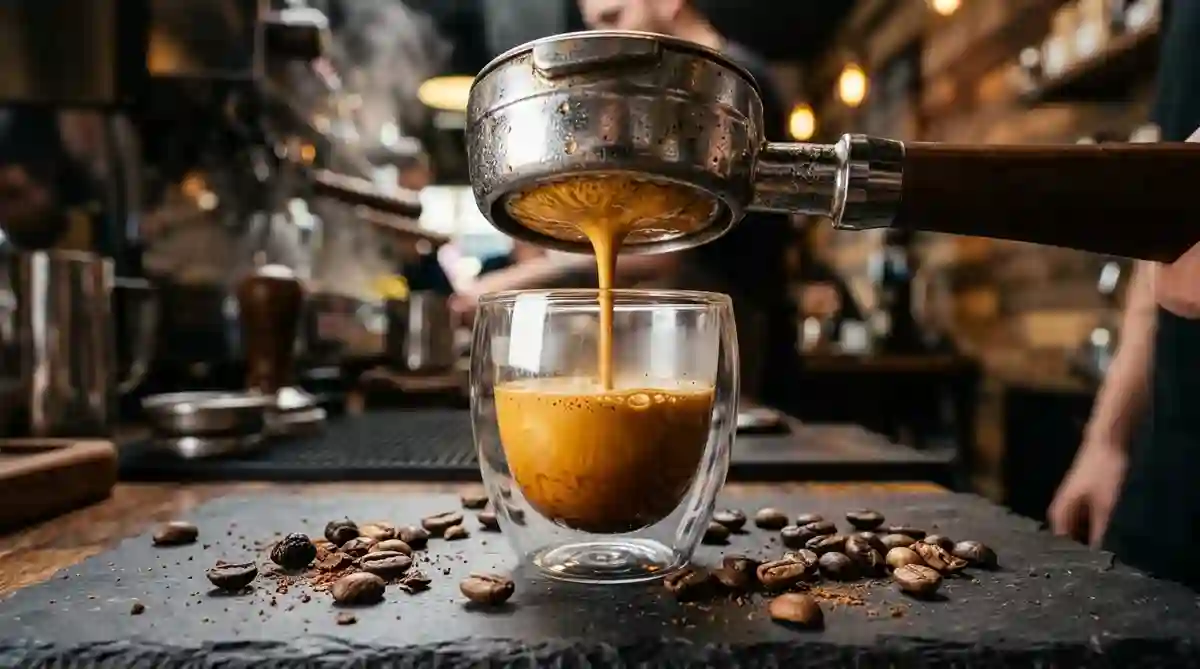
| Espresso (Normale) | 1:2 | 150g yield (18g in ➔ 36g out) | 90–93°C | Fine Table Flour | 25–30 sec |
| Cold Brew (Concentrate) | 1:5 to 1:7 | 43g – 60g | Cold / Room Temp | Extra Coarse (Peppercorn) | 16–24 hours |
| Cold Brew (Ready-to-Drink) | 1:12 to 1:15 | 20g – 25g | Cold / Room Temp | Extra Coarse | 16–24 hours |
| AeroPress | 1:11 to 1:13 | 23g – 27g | 85–90°C | Medium-Fine | 1:30–2:00 min |
| French Press (Cafetière) | 1:12 to 1:15 | 20g – 25g | 93–96°C | Coarse (Sea Salt) | 4:00 min |
| Pour-Over (V60 / Kalita) | 1:15 to 1:16 | 18.8g – 20g | 92–96°C | Medium-Fine (Table Salt) | 2:45–3:15 min |
| Chemex | 1:16 to 1:17 | 17.6g – 18.8g | 92–96°C | Medium-Coarse (Rough Sand) | 3:30–4:30 min |
| Moka Pot (Bialetti) | 1:8 to 1:10 | 30g – 37.5g | Medium Heat | Fine-Medium | 3:00–4:00 min |
| Automatic Drip Machine | 1:16 to 1:18 | 16.6g – 18.8g | 92–96°C | Medium (Beach Sand) | 4:00–6:00 min |
| Siphon (Vacuum Pot) | 1:14 to 1:15 | 20g – 21.4g | 91–94°C | Medium | 2:00 min |
Quick Reference Table: Cups, Ounces, Grams & Scoops
| Servings / Volume | Water Volume (ml / oz) | Coffee Grounds at 1:16 (g) | Tablespoons (~5.5g) | Barista Scoops (~10g) |
|---|---|---|---|---|
| 1 Small Cup | 150 ml (5.1 fl oz) | 9.4 g | 1.7 tbsp | 1.0 scoop |
| 1 Standard Mug | 250 ml (8.5 fl oz) | 15.6 g | 2.8 tbsp | 1.6 scoops |
| 1 Large Cafe Mug | 350 ml (11.8 fl oz) | 21.9 g | 4.0 tbsp | 2.2 scoops |
| 2 Cups (Small Pot) | 500 ml (16.9 fl oz) | 31.3 g | 5.7 tbsp | 3.1 scoops |
| 3 Cups (French Press) | 750 ml (25.4 fl oz) | 46.9 g | 8.5 tbsp | 4.7 scoops |
| 4 Cups (1 Liter) | 1,000 ml (33.8 fl oz) | 62.5 g | 11.4 tbsp | 6.3 scoops |
| 8 Cups (Half Gallon) | 1,890 ml (64 fl oz) | 118.1 g | 21.5 tbsp | 11.8 scoops |
| 12 Cups (Full Batch) | 2,840 ml (96 fl oz) | 177.5 g | 32.3 tbsp | 17.8 scoops |
Why You Should Weigh Coffee Beans Instead of Using Scoops
Measuring coffee by volume with tablespoons or scoops is notoriously inaccurate. A tablespoon of light-roast Ethiopian coffee is significantly denser, heavier, and smaller than a tablespoon of dark-roast French roast coffee (which expands and becomes porous during the roasting process). By utilizing a digital scale accurate to 0.1g, you eliminate guesswork, conserve expensive specialty coffee beans, and replicate your favorite cafe cup every single morning.
Frequently Asked Questions (FAQ)
The Specialty Coffee Association (SCA) defines the Golden Ratio as 1:15 to 1:17. This translates to 1 gram of coffee grounds for every 15 to 17 grams (ml) of water, producing a balanced cup with 18% to 22% total extraction yield.
For a standard 300ml cup using the classic 1:16 Pour-Over ratio, you need exactly 18.75 grams of ground coffee (300 ÷ 16). If you prefer a stronger brew (1:15), use 20 grams.
Coffee grounds absorb approximately 2.0 to 2.1 times their dry weight in water. For example, if you brew with 20g of ground coffee and pour 300ml of water, the grounds will retain ~42ml of water, yielding approximately 258ml of liquid coffee in your mug.
Light roasts are denser and less soluble, benefiting from slightly tighter ratios (1:15 to 1:15.5) and hotter water (94–96°C) to extract complex sugars and acidity. Dark roasts are highly porous and soluble; they taste smoother with wider ratios (1:16.5 to 1:17.5) and cooler water (88–91°C) to avoid extracting harsh ash and bitter polyphenols.
Cold Brew Concentrate is brewed at a strong 1:5 to 1:8 ratio, designed to be diluted 1:1 with cold water, milk, or poured over ice. Ready-to-drink (RTD) cold brew is brewed at 1:12 to 1:15 and can be poured straight from the fridge without dilution.